
When you see scaffolding outside a home or building, it may seem like a simple structure of poles and boards. But have you ever wondered how is scaffolding attached to a building? The process is more technical than it appears and plays a vital role in keeping both workers and the public safe.
We will explain exactly how scaffolding is fixed in place, why secure attachment matters, and the types of fixings used depending on the building and project.
Why Attach Scaffolding to a Building?
Scaffolding needs to be stable, especially when used at height or over long periods. While ground support (base plates and sole boards) provides some stability, most scaffolding structures must also be secured to the building to prevent:
- Movement in strong winds
- Collapse due to uneven weight or overloading
- Accidental tipping if something hits the structure
Attaching scaffolding to a building helps the entire system resist horizontal forces and keeps the working platform secure.

What Is a Scaffold Tie?
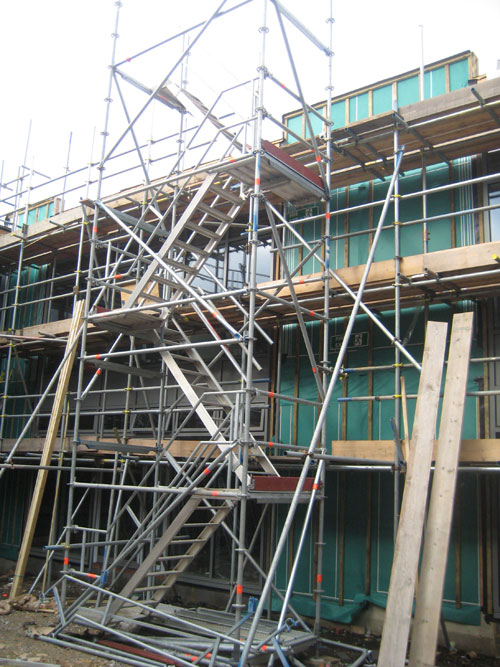
A scaffold tie is the general name for any fixing that connects a scaffold to a structure. It transfers some of the scaffold’s load into the building, reducing the pressure on the base and making the scaffold safer.
There are many different types of scaffold ties, and the method used depends on:
- The type of wall or structure
- Whether the surface can be drilled or not
- The expected duration of the scaffold
- The load and height of the scaffold
Scaffolders assess all of these factors during the design and planning phase.
Common Types of Scaffold Ties
Here are the most commonly used ties when scaffolding is attached to a building:
1. Through Ties
Through ties go through open windows or doorways and are anchored to internal parts of the building using strong beams or props.
These are very secure and don’t require drilling into external walls, making them ideal for buildings with heritage or conservation value.
2. Reveal Ties
Reveal ties work in a similar way but are used inside window or door openings where through access is limited. A horizontal bar is wedged across the opening (the reveal), with a scaffold tie connected to it from the outside.
To avoid movement, reveal ties must be checked regularly and should only be used for light-duty applications unless otherwise supported.
3. Anchor Ties (Drilled or Resin-Fixed)
Anchor ties are fixed directly into the brick or masonry of the building using mechanical or chemical anchors:
- Mechanical anchors expand once inside the drilled hole, creating a firm hold.
- Resin anchors involve inserting a special resin that hardens to secure the tie.
This method is ideal for heavier scaffolding and high wind exposure. Holes can be filled after dismantling, leaving minimal trace.
4. Box Ties
Box ties wrap around existing building features such as steel columns or beams. They’re often used on commercial buildings or structures with exposed framework.
This type avoids drilling and provides a secure fixing point when suitable features are available.
5. Lip Ties and Joist Ties
In buildings with exposed joists or frames, scaffolders can use specially designed ties to hook onto structural parts without damaging the building fabric.
These are typically used in timber-framed buildings or during internal scaffolding work.
How Often Are Scaffold Ties Used?
Ties must be installed in line with guidance from TG20:21, the official scaffolding design standard produced by the NASC (National Access and Scaffolding Confederation).
As a rough guide:
- At least one tie is placed every 4–5 metres horizontally and every 4 metres vertically.
- More ties are needed in windy conditions, for taller scaffolds, or where materials are stored at height.
If a scaffold isn’t attached securely and frequently enough, it may become unsafe, especially in poor weather.
Can Scaffolding Be Free-Standing?
Yes, but only in certain cases. Scaffolding systems such as independent scaffolds or birdcage scaffolds are designed to stand on their own without building attachment.
These are typically used:
- Indoors (e.g. for ceiling repairs or decoration)
- On very low-rise structures
- For short-term jobs
However, any free-standing scaffold still needs bracing, base stability, and sometimes temporary weights or barriers to stay secure. It’s not suitable for long-term or high-rise use.
Temporary Roofs and Extra Supports
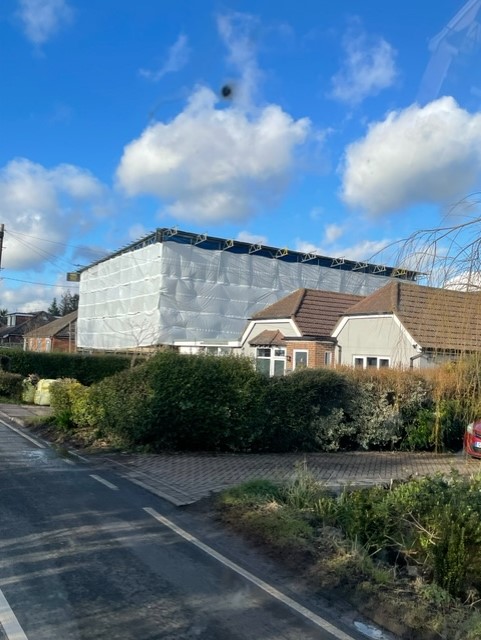
When scaffolding is used with a temporary roof, the tie system becomes even more important. The additional wind load from the covering requires stronger fixings and more frequent tie placement.
In these situations, scaffolders often use a combination of anchor ties and through ties to provide the strength needed.
Protecting the Building
Some people worry that drilling into a building will cause lasting damage. In most cases, scaffolders will:
- Use as few drilled fixings as possible
- Avoid specialist finishes or delicate structures
- Fill or repair any drilled holes during removal
- Use non-invasive methods where possible
If the building is listed or in a conservation area, planning may be needed and only non-intrusive methods like through or reveal ties will be used.
Can I Choose How My Scaffold Is Attached?
While scaffolders will always choose a method that keeps the site safe, you can raise concerns during the planning stage. For example:
- If you want to avoid drilling into brickwork
- If windows must remain open or accessible
- If your property is rented and landlord consent is needed
Clear communication helps the scaffold design meet both safety and site needs.
To discuss scaffolding for your home or project, contact us here.
Scaffold Inspection and Tie Checks
Once scaffolding is erected, it must be inspected:
- At least every 7 days
- After strong winds or extreme weather
- After any alteration
The scaffold ties are an important part of this inspection. Loose or damaged fixings must be repaired immediately. Safety tags are often attached to show the last inspection date.
Why Proper Attachment Matters
Poorly attached scaffolding is a serious risk. It can lead to:
- Structural failure or collapse
- Injuries to workers or the public
- Delays to your project
- Fines or legal action under health and safety law
Hiring a qualified and experienced scaffolding company helps avoid these risks. All operatives should hold CISRS cards and follow best practice.
You can also find behind-the-scenes examples of safe setups on our Instagram, where we show recent work around Kent.
Conclusion
If you’ve been asking, how is scaffolding attached to a building?, the answer is that it’s done using carefully selected ties designed to suit the building type, site conditions, and project needs.
Whether it’s a through tie, anchor, or reveal method, proper attachment is what gives scaffolding its strength. When done correctly by trained professionals, it provides a safe, secure, and reliable platform for all kinds of work.
If you’re planning work on your property and need advice on safe scaffold installation, contact us here to book a site assessment and quote. Our team at WBM Scaffolding covers Ashford, Kent, and surrounding areas with trusted, professional service tailored to your project.